Meetings, Glaucoma
GAT: End of the Road?
The current gold standard for IOP measurement may not be perfect. But replacing it is not simply a matter of finding something easier to use.

Timothy Norris
Published: Monday, September 28, 2026
Goldmann applanation tonometry (GAT) has been central to glaucoma care for decades. It requires contact, topical anaesthesia, and fluorescein, and its readings are influenced by corneal properties. These limitations have naturally driven the search for alternatives that are easier for patients and simpler to integrate into modern clinical workflows.
For Luís Pinto MD, PhD, however, the question is whether those alternatives are good enough to replace a measurement on which so much of glaucoma care has been built.
“I would be very happy to replace GAT tomorrow if we had something demonstrably better,” Dr Pinto said. “But IOP is too important a number for us to change the way we measure it simply because another method is easier or feels more modern.”
Newer technologies have clear advantages. Rebound tonometry is particularly useful in children and in settings where measurements are delegated to technicians. Non-contact devices fit well into triage, screening, and virtual clinics, while instruments such as the Ocular Response Analyzer (Reichert) can provide additional information on corneal biomechanics. 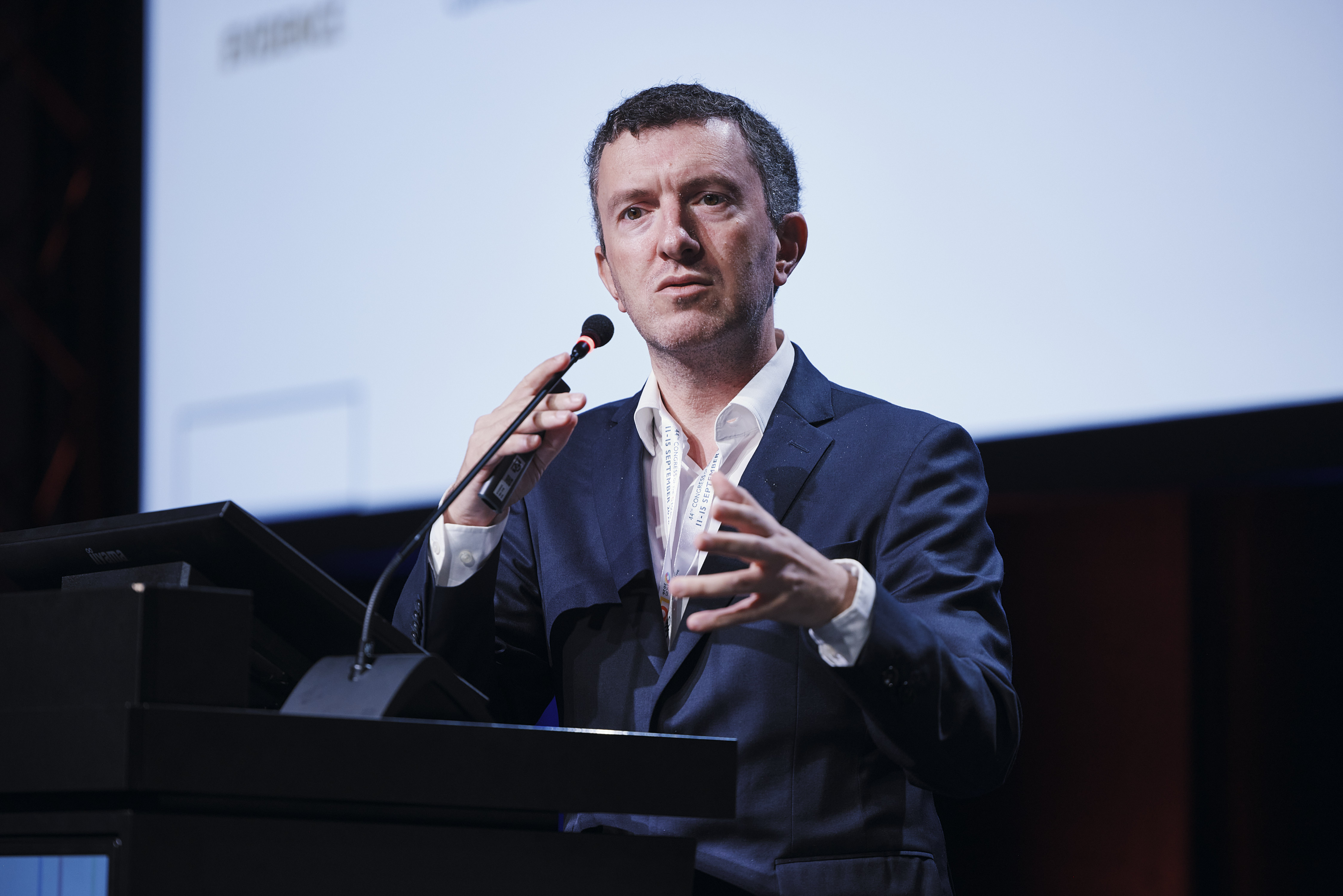
“These are useful developments,” Dr Pinto said. “But making a measurement easier to obtain does not necessarily make it a better measurement.”
That distinction matters because different tonometers do not necessarily provide interchangeable values. In glaucoma, a difference of only a few millimetres of mercury can influence whether treatment is changed, intensified, or considered successful.
“We spend a great deal of time saying that one or two millimetres of mercury matter,” Dr Pinto said. “If that is true, we cannot at the same time be relaxed about changing to devices that may differ from each other by the same amount.”
There is also value in having a common reference across clinics and healthcare systems. A patient followed with GAT can move from Lisbon to Beijing or Melbourne and the next clinician has a measurement immediately familiar to them. Such continuity becomes more difficult when different centres use technologies whose readings cannot simply be treated as equivalent.
The same applies to the evidence base. Much of what glaucoma specialists know about IOP, progression, and target pressure comes from clinical trials in which pressure was measured with GAT.
“When we say that a patient should be at 12, 15, or 18 mmHg, those numbers are not independent of the way they were measured,” Dr Pinto said. “They come from decades of clinical practice and clinical trials using Goldmann tonometry.”
This does not mean that a future device needs to reproduce GAT. A new technology may prove more reproducible, less dependent on the cornea, easier for patients, or even better at predicting progression. If so, there is no reason not to change.
“But then we need to understand what those new numbers mean clinically,” Dr Pinto said. “That is a higher bar than simply showing the device is convenient.”
Cost and workflow also matter, but for Dr Pinto, the main issue remains confidence in the measurement itself.
“The gold standard does not have to be perfect,” he concluded. “It has to be the best reference we have. When something better comes along, with the evidence to support it, I will be very happy to let Goldmann go. But in September 2026, we may simply not be there yet.”
Luis Abegão Pinto MD, PhD spoke at Glaucoma Day. He is Head of the Glaucoma Clinic of the Department of Ophthalmology at the Centro Hospitalar Lisboa Norte, Portugal.